BASH Guideline
Section 1: The Clinical Approach
Section 2: Primary Headaches

2.4 The trigeminal autonomic cephalalgias
2.4.1 Cluster headache
2.4.1.1 Epidemiology
Cluster headache has a prevalence of about 0.1% (Fischera et al., 2008).
The peak age of onset is between the 3rd and 4th decades (Ekbom, 1970b; Friedman & Mikropoulos, 1958; Kudrow, 1980; Manzoni et al., 2016; Sutherland & Eadie, 1972; Vikelis & Rapoport, 2016)
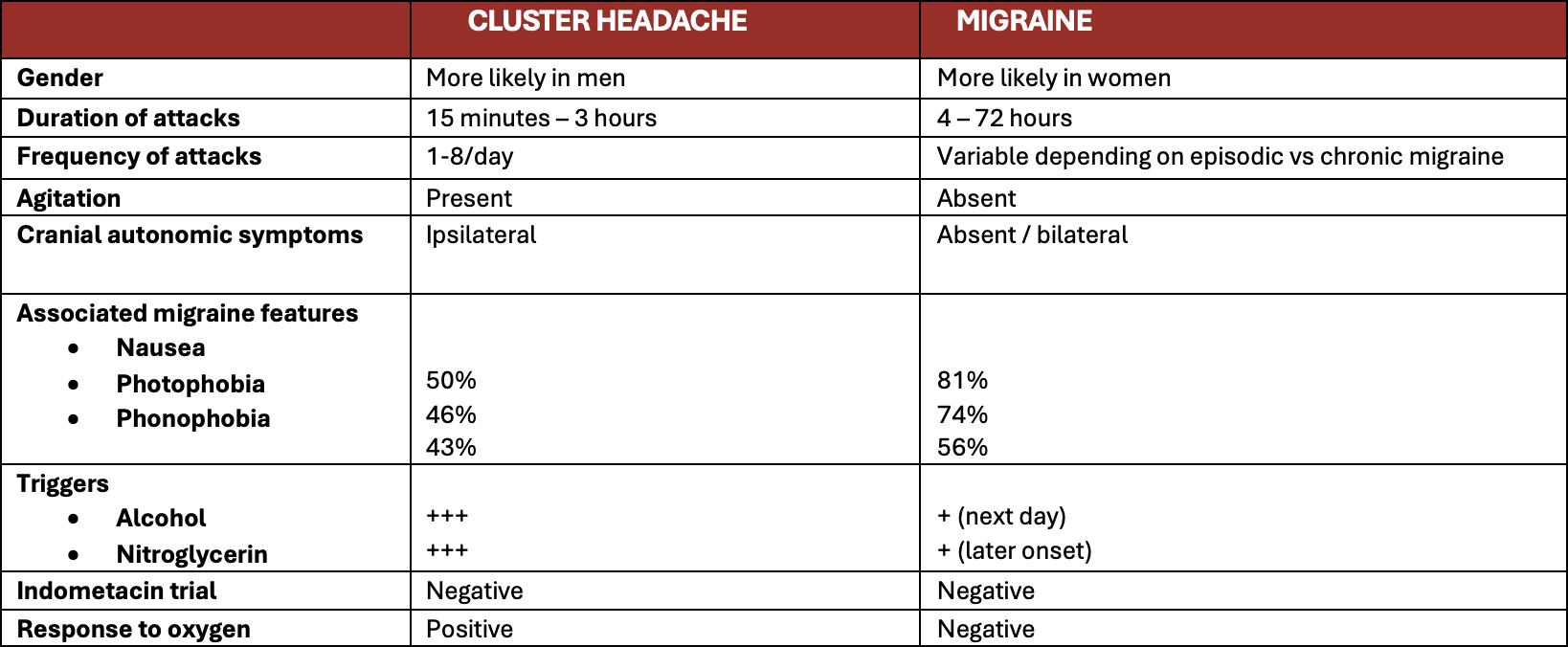
The disorder has been reported as four times more common in men (Fischera et al., 2008), though more recent evidence suggests that the ration is reducing to approximately 3:1 (Bahra et al. 2002).
Cluster headache sufferers are often smokers (Manzoni, 1999; Sjaastad, 1992; Vikelis & Rapoport, 2016).
2.4.1.2 Clinical features
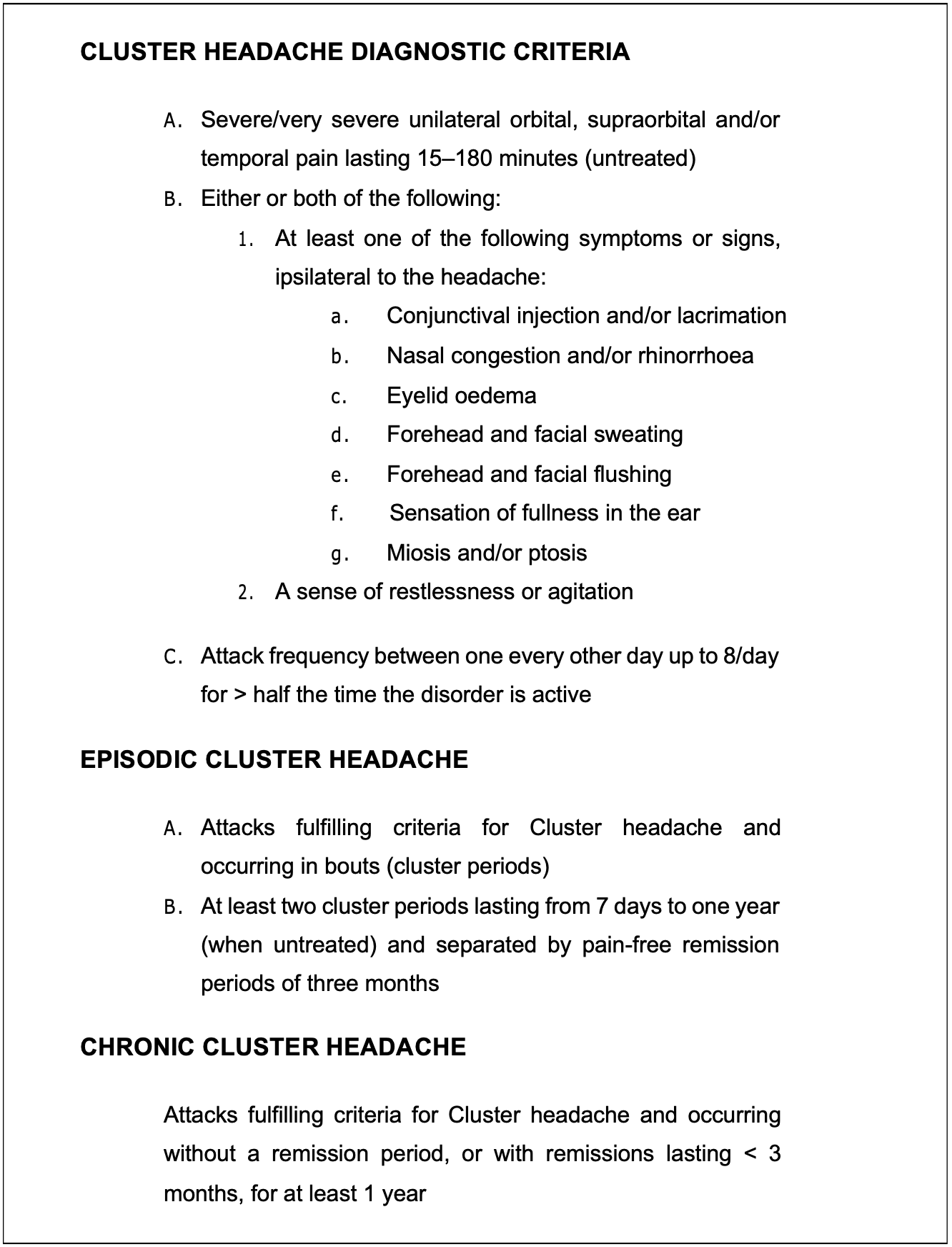
The current classification of cluster headache is well validated (http://www.ichd- 3.org).
Attacks are characterised by excruciating and strictly unilateral headache. However, attacks can change side, across different bouts, within the same bout and rarely within an acute attack (Ekbom, 1970a; Friedman & Mikropoulos, 1958; Kudrow, 1980; Lance & Anthony, 1971; Schurks et al., 2006; Sutherland & Eadie, 1972; Bahra et al. 2002; Torelli et al., 2001).
The attacks are accompanied by prominent and typically ipsilateral cranial autonomic features which are primarily parasympathetic and can most commonly include lacrimation, conjunctival injection, rhinorrhoea, nasal congestion, drooping or swelling of the eyelid, facial/forehead flushing and sweating. The presence of cranial autonomic features in headache does not necessarily indicate cluster headache or another TAC. For example, these features can also occur in migraine, although would be more likely to be bilateral (Lai et al. 2009).
Attack duration is a key distinguishing clinical feature in the diagnosis of cluster headache. Individual cluster attacks typically last between 15 minutes and 3 hours. When a single attack exceeds 4 hours in duration, clinicians should carefully reassess the diagnosis and consider alternative causes of headache.
Attack frequency is another important discriminating factor. Cluster headaches most commonly occur 1–3 times per day (often at predictable times). Some patients may experience attacks on alternate days or, less commonly, at higher frequencies. However, the occurrence of more than 8 attacks within a 24-hour period is unusual and should prompt consideration of an alternative diagnosis. One of the most distinguishing features during the cluster attack is the presence of prominent restlessness associated with agitation. Such features are seen in the vast majority of patients. Patients typically pace up and down, or kneel and press their head into the floor or a pillow, or rock to and fro, clutching the affected side,
unlike migraineurs who are typically motion-sensitive and prefer to remain still (Bahra et al., 2000; Schurks et al., 2006; Torelli et al., 2001; Vikelis & Rapoport, 2016).
Cluster headache can be episodic or chronic. Episodic cluster bouts usually last between 2 weeks and 3 months and most often occur once every 1-2 years. 10 to 20% of sufferers experience chronic cluster headache, which is currently defined as attacks occurring without a remission period, or with remissions lasting <3 months, for at least 1 year (Bahra et al., 2002; Ekbom, 1970b; Friedman & Mikropoulos, 1958; IHS, 2018; Kudrow, 1980; Lance & Anthony, 1971; Schurks et al., 2006; Sutherland & Eadie, 1972).
Active bouts of cluster headache can be seasonal and at the same time each year. During an active bout, sufferers can experience attacks at set times during the day or night for weeks or months (Friedman & Mikropoulos, 1958; Hornabrook, 1964; Kudrow, 1987; Sutherland & Eadie, 1972; van Vliet et al., 2006; Vikelis & Rapoport, 2016).
Cluster attacks may wake patients from sleep, typically about 1.5-2 hours after they have fallen asleep (Bahra et al., 2000; Barloese et al., 2015; Ekbom, 1970a; Russell, 1981; Vikelis & Rapoport, 2016).
Some individuals can exclusively have nocturnal attacks (Ekbom, 1970a).
In between attacks of pain, patients can experience a background dull ache in the same distribution of the cluster attacks. The interparoxysmal pain tends to settle when the cluster bout resolves (Marmura et al., 2010).
During an active cluster bout, some patients can be exquisitely sensitive to alcohol triggering an attack, usually within 60-90 minutes, unlike in migraine patients where it would trigger the next day. The propensity does not occur out of the bout (Ekbom, 1968).
Table 1. Comparing clinical features of cluster headache and migraine.
2.4.1.3 Management
Cluster headache management
- Cluster headache management includes ensuring appropriate investigation and specialist involvement.
- Specialist confirmation of the diagnosis is needed in any person presenting with a first bout of cluster headache (NICE, 2024).
- All patients should undergo neuroimaging at diagnosis, we recommend the use of MRI, to exclude secondary causes.
- In cases where symptoms are refractory, atypical, or show red‑flag features, repeat imaging is advised, with particular attention to the pituitary region and cavernous sinus, as lesions in these areas can mimic or trigger cluster‑like headaches.
A) Acute Treatment
Triptans
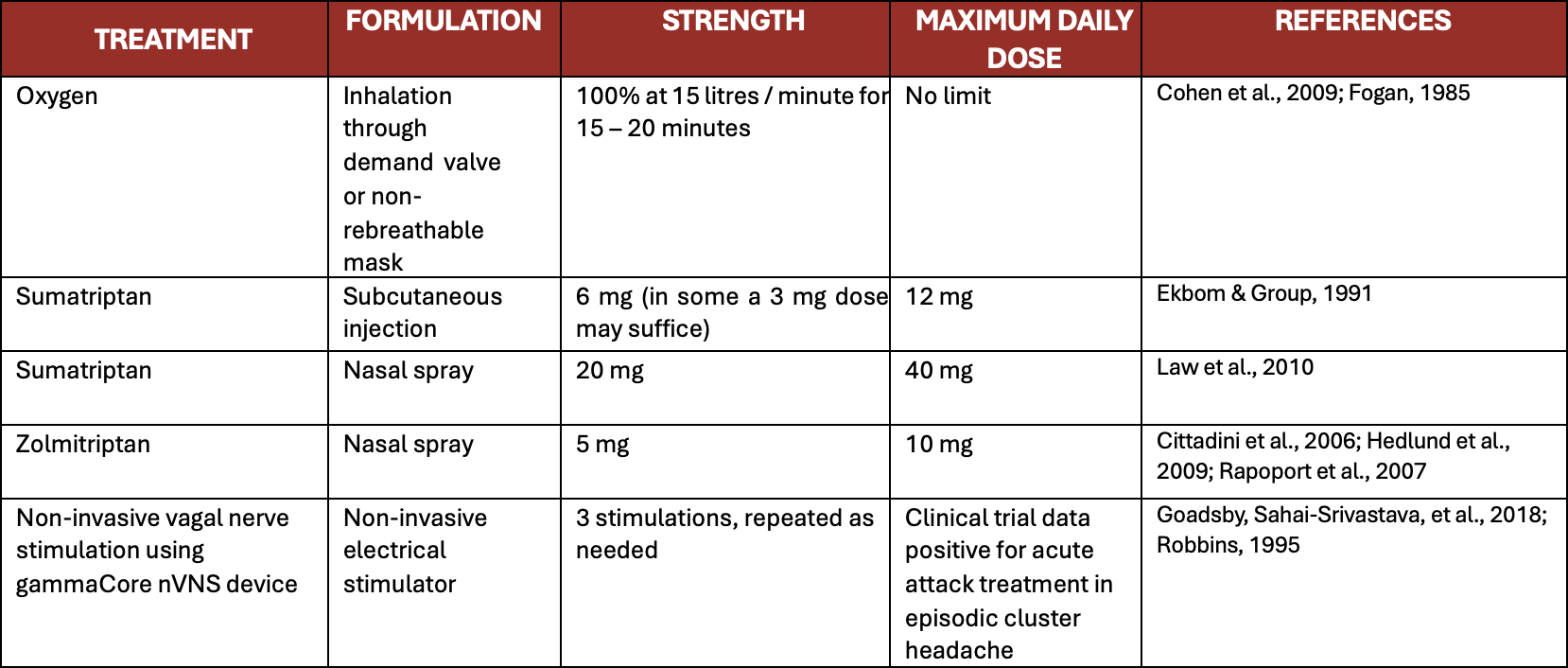
The most effective acute treatment is the sumatriptan 6mg subcutaneous injection with significant relief within 15 minutes (Ekbom & Group, 1991). In the UK, NICE CG150 guidelines recommend allowance for patients to be provided with maximum daily allowance of triptans as required as per BNF prescribing guidance (i.e. 12mg subcutaneous sumatriptan per day) (Ekbom & Cole, 1993). Hence, we recommend the use of up to two 6mg subcutaneous sumatriptan per day (one per attack) should be prescribed, if required, for the duration of a cluster bout.
Triptan medication prescribing should not be restricted during a cluster headache bout. The treatment is generally well tolerated, without tachyphylaxis (Ekbom et al., 1995; Gobel et al., 1998).
Triptans should be used as quickly as possible in an attack to ensure efficacy. Subcutaneous injections usually work quicker and more effectively than nasal preparations and in clinical practice are often more effective for attacks arising from sleep. Patients who also have predisposition to migraine may develop exacerbation of their migraine disorder whilst using a triptan
effectively for their cluster attacks (Hering-Hanit, 2000; Paemeleire et al., 2006).
If the subcutaneous sumatriptan is not suitable, nasal formulations of zolmitriptan 5mg and sumatriptan 20mg can be used. There is better quality evidence for zolmitriptan nasal spray.
Table 2. Efficacy of different triptan formulations (Adapted from Wei et al, Pract Neurol. 2019).

Oxygen
High flow oxygen 100% at 15 litres/minute for 15-20 minutes, using a non-rebreathing mask, is effective in aborting acute attacks of cluster headache (Cohen et al., 2009). High flow oxygen terminates attacks in approximately 75% of patients, typically within 15 minutes (Cohen et al., 2009).
There is no limit to the use of high flow oxygen, though obvious cautions around vaping/smoking/flames/fire hazards near oxygen need to be considered/addressed. Oxygen is often used together with triptans in patients with multiple attacks. Table 3 shows recommended acute cluster attack treatments.
All oxygen prescribing needs a risk assessment to evaluate safe prescribing; this is not limited to the hazard of smoking but includes advice on cooking and petroleum-based products (see Oxygen for Cluster information leaflet). A pragmatic approach should work towards accessibility of oxygen for cluster headache patients whilst considering safe prescribing.
Advanced practical guidance
- In the UK and other countries where sumatriptan is available as a 3mg subcutaneous injection, there is anecdotal clinical experience to suggest similar efficacy to 6mg doses. It maybe practical to consider use of 3mg injections (although not explicitly licensed for this indication), up to 12 mg per day (i.e up to four 3mg doses to cover a potential of 4 attacks). The 3mg dose maybe associated with a better side effect protocol. Anecdotally, for some patients, they still require the 6mg dose for attacks arising at night if the 3mg dose is ineffective or unreliable.
- Medication overuse headache may occur in patients with cluster headache, in those with coexisting migraine. However, it is typically a bilateral, symmetrical, and a milder “migraine-like” headache, rather than the severe, unilateral pain characteristic of cluster headache. Typically, triptans do not lead to more frequent or more severe attacks of cluster headache. Given the severity of cluster headache, it is recommended to use triptans as often as required each day during a bout (up to the maximum permitted daily dose) to treat acute attacks.
- Some expert experience suggests that nasal triptans are best administered with head tipped forward and kept forward up to 2 minutes, with avoidance of sniffing, to allow absorption through nasal mucosa.
- Some publications have noticed patient preference and potential clinical advantages for demand valve delivery devices for oxygen (Petersen et al; Goadsby et al). Demand valve administration of oxygen has potential advantages over non-rebreathing mask delivery including (a) potential increased rapidity of action, (b) increased percentage of attacks successfully treated, (c) increased safety, (d) smaller oxygen consumption levels, and (e) potential cost savings both in terms of reduced oxygen costs and reduced triptan consumption. There is limited data at present to definitively support the use of demand valve oxygen over use of non-rebreathing mask delivery. In clinical practice, we are seeing an ever-increasing number of patients finding very significant and often quite dramatic improvements of demand valve over non rebreathing mask delivery devices. Where we see no overt disadvantages for demand valve delivered oxygen, we recommend demand valves should be prescribed to patients with cluster headache requiring oxygen in the UK.
Table 3. Recommended Acute Cluster attack treatments
B) Short-term preventive treatments
Steroid
Oral corticosteroids have been shown to be effective in the prevention of cluster headache attacks (Jammes, 1975; Obermann et al., 2021).
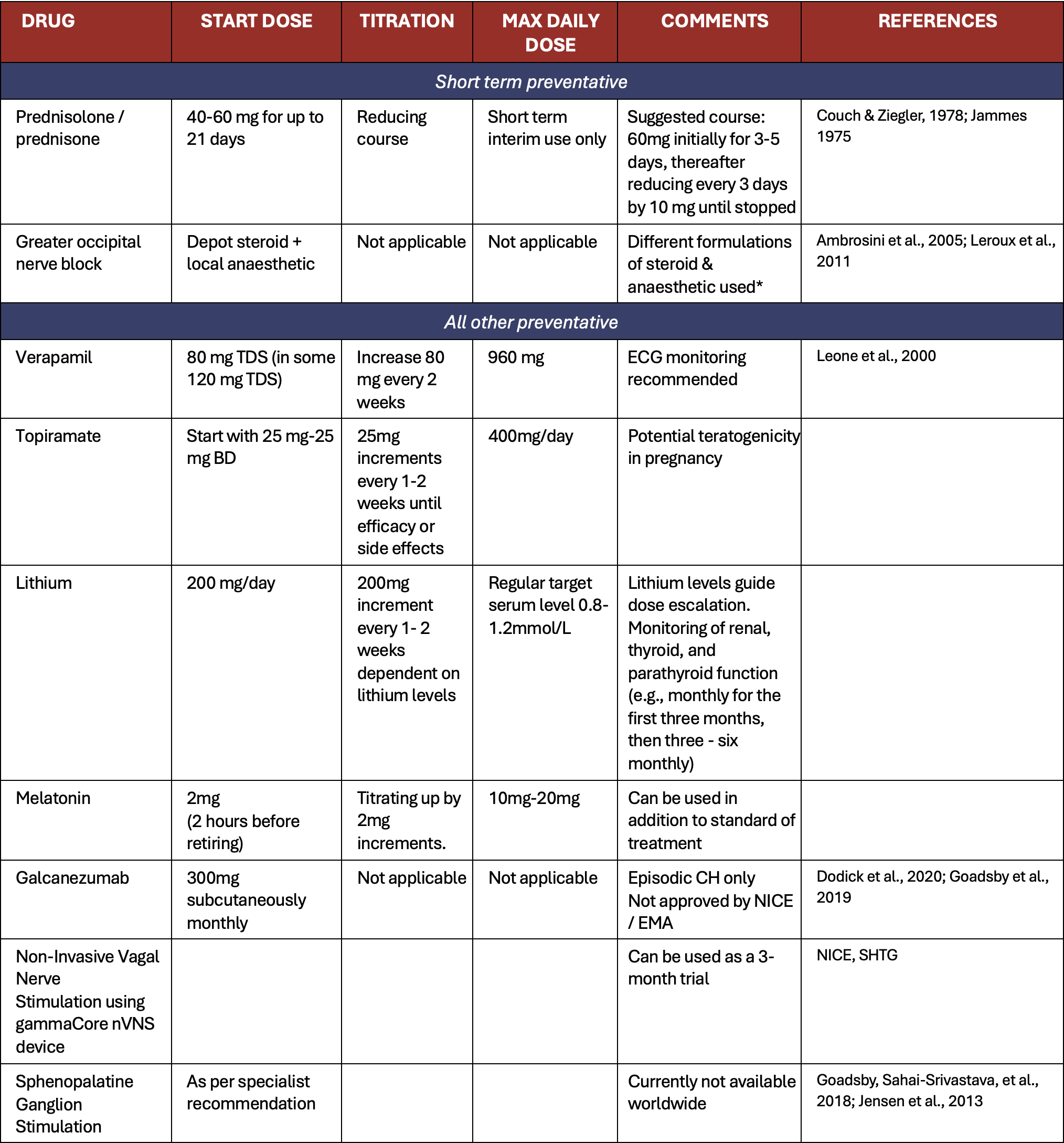
The response should be dramatic and seen within 48 hours. If there is not a dramatic response within this time they should be stopped. Where effective the dose should reduce to allow a short course (e.g. 60mg initially for 3-5 days, thereafter reducing every 3 days by 10mg until stopped). Given the high adverse effect profile, corticosteroid use is best restricted as a short-term treatment in patients with multiple daily attacks, which cannot be treated effectively acutely, whilst an alternative preventive is being introduced. We suggest they may be used up to one course every 1-2 years due to the side effect profile.
GON
An alternative to oral corticosteroids is Greater Occipital Nerve (GON)/suboccipital nerve block which has the advantage of minimising the potential systemic side effects of corticosteroids. Greater occipital/suboccipital nerve block (i.e. suboccipital depot steroid and local anaesthetic injection) has shown a significant reduction or resolution of attacks compared to placebo, despite a high placebo response rate (Ambrosini et al., 2005; Leroux et al., 2011). GONs (with steroid) are typically limit to 12 weekly. There is limited evidence on the frequency of GON blocks, but cases of adrenal suppression associated with frequent use of nerve blocks using steroid, have been reported (Hywel & Silver, 2014).
C) Preventive treatments
Verapamil
Verapamil is an effective preventive treatment in cluster headache (Leone et al., 2000).
The doses required to suppress cluster headache attacks can be higher than those used to treat cardiac disorders. Clinically significant cardiac rhythm disturbances can occur and are neither dose nor time dependent (Cohen et al., 2007; Lanteri-Minet et al., 2011). It is possible for patients to develop cardiac conduction abnormalities even after they have been on a stable dose for a long period. Regular ECG monitoring may help prevent serious cardiac conduction anomalies.
We recommend an ECG is done at baseline (checking PR interval, rate, ECG axis and QRS complexes to ensure no features of heart block). From a practical perspective it is reasonable to perform an ECG every 2 weeks during dose escalation (many clinicians repeat the ECG prior to each dose increase). The dose should typically start at 80mg three times a day and escalate by a single dose of 80mg every week until an effective or maximum tolerated dose is achieved, anywhere up to 360mg three times a day. The dose titration should be adjusted to the individual patient’s needs. There is also a faster titration regime used by some specialist (starting dose 120mg three times a day). See Verapamil Regime in Cluster Headache leaflet for suggested titration.
At a stable dose ECG should be done once every 4 to 6 months (e.g. every 4 months for higher doses than 480mg daily). Any cardiac rhythm disturbance may require dose reduction or drug withdrawal (Cohen et al., 2007).
In episodic cluster headache, once control has been achieved the preventative treatment can be slowly withdrawn. Patients should aim to withdraw from the drug in between bouts. If attacks recur, preventive treatment should be re-established.
Topiramate
Topiramate can be used as a preventive option in cluster headache, typically started at 25 mg once daily and increased to 25 mg twice daily, then titrated in 25 mg weekly increments until either benefit is achieved or side effects limit further escalation (Wei & Goadsby, 2021). It requires careful monitoring because it can cause cognitive slowing, paraesthesia, weight loss, mood changes, and kidney stones. Topiramate carries a significant teratogenic risk. In women of childbearing potential, topiramate should only be prescribed following a thorough discussion of its potential benefits and risks. The requirements of the Pregnancy Prevention Programme (PPP) must be fulfilled, including confirmation that the patient has received and understood information regarding the teratogenic risks of topiramate, has signed the Risk Awareness Form, and is using highly effective contraception throughout treatment and for at least 4 weeks after discontinuation of therapy (EMA & HMA 2017; MHRA 2024). Highly effective contraception refers to contraceptive methods with a failure rate of <1% per year when used correctly, including intrauterine contraception, contraceptive implants and sterilisation (oral hormonal contraception is not considered highly effective and a barrier method is often added to reduce risk). See Topiramate leaflet for suggested titration.
Lithium
Lithium can be used as a preventive treatment for cluster headache (Wei & Goadsby, 2021). Lithium is typically initiated at 200 mg at night and increase every one to two weeks by 200mg, as single night time dose, with further adjustments guided by serum levels, clinical response, and tolerability. Lithium levels need to be measured to target a serum level of 0.8-1.2 mmol/L. Treatment requires regular monitoring of renal, thyroid, and parathyroid function due to lithium’s long-term effects on these systems.
Melatonin
Melatonin may be used as an adjunctive preventive option, typically started at 2 mg at night (2 hours before bed) and increased in 2 mg increments to a usual effective range of 10–20 mg, depending on response and tolerability (Wei & Goadsby, 2021). Based on clinical experience, both modified‑release and immediate‑release melatonin formulations can be utilised (there is no evidence of superiority of one preparation over the other and the prescribing decision should be patient specific).
Galcanezumab
Galcanezumab, a CGRP monoclonal antibody therapy delivered as monthly subcutaneous injection has good evidence when delivered at a dose of 300mg per month specifically for prevention of episodic cluster headache (this is higher than the UK/European licensed dose for migraine which is 240mg initiation, 120mg monthly for maintenance) (Dodick et al., 2020; Goadsby et al., 2019). Whilst this is approved by the FDA, this is not currently approved by NICE or European Medicines Agency. The evidence in chronic cluster headache is weak but it is used by some in this group (Lamas Pérez et al., 2024).
Other options
Patients with refractory cluster headache should be referred to specialised headache services capable of providing advanced therapy options up to and including IV dihydroergotamine, occipital nerve stimulation and potentially deep brain stimulation.
Table 4. Recommended preventative treatments for cluster headaches
*there does not seem to be a difference between local anaesthetics
Advanced practical guidance
Where greater occipital nerve blocks are ineffective or provide only short-lived benefit, clinical experience and limited anecdotal evidence suggest that a broader approach using multiple cranial nerve blocks may improve both response and duration of effect. This may include additional blockade of the lesser occipital, preauricular, supraorbital, and supratrochlear nerves, with anterior injection sites using long-acting local anaesthetic alone.
Appendix 1: Classification of cluster headache (http://www.ichd-3.org)